<header>
    <h1>Vegetable Oil In Compost: An Ultimate Guide</h1>
</header>

<main>
    <section>
        <h2></h2>
        <p>If you are an avid gardener or someone who cares about the environment, you might have heard of composting. Composting is the process of breaking down organic matter into nutrient-rich soil that can be used for gardening purposes. It is an excellent way of reducing waste and producing natural fertilizers for your plants. However, not all organic materials are suitable for composting, and one of the most debated ones is vegetable oil.</p>
        <p>People often wonder if they can use vegetable oil in composting or not. The answer is yes, but there are some important things you need to know before adding it to your compost pile. In this ultimate guide, we will discuss everything you need to know about vegetable oil in composting.</p>
    </section>

    <section>
        <h2>What Is Vegetable Oil?</h2>
        <h3>Definition</h3>
        <p>Vegetable oil is a fat that is derived from plant-based sources such as soybeans, corn, sunflower seeds, and olives. It is commonly used for cooking and frying because of its high smoke point, which means it can withstand high temperatures without breaking down or smoking.</p>
        <h3>Types Of Vegetable Oil</h3>
        <p>There are several types of vegetable oil available in the market, including:</p>
        <ul>
            <li>Soybean Oil</li>
            <li>Corn Oil</li>
            <li>Canola Oil</li>
            <li>Sunflower Oil</li>
            <li>Olive Oil</li>
            <li>Palm Oil</li>
        </ul>
        <p>Each type of vegetable oil has its unique properties and uses.</p>
    </section>

    <section>
        <h2>Why Use Vegetable Oil In Compost?</h2>
        <h3>Benefits Of Adding Vegetable Oil To Compost</h3>
        <p>Using vegetable oil in composting can have several benefits, such as:</p>
        <ul>
            <li>It adds moisture to the compost pile, which is essential for the breakdown of organic matter.</li>
            <li>It adds carbon to the compost pile, which helps maintain the right balance of carbon and nitrogen.</li>
            <li>It helps break down organic matter faster by providing a food source for microorganisms that are responsible for decomposing the material.</li>
            <li>It helps improve the texture and quality of the finished compost.</li>
        </ul>
        <p>However, it's important to note that adding too much vegetable oil to your compost pile can do more harm than good. We will discuss this in detail later in the article.</p>
    </section>

    <section>
        <h2>How To Use Vegetable Oil In Compost?</h2>
        <h3>Step-By-Step Guide</h3>
        <p>Here's how you can use vegetable oil in compost:</p>
        <ol>
            <li> by collecting your organic waste, such as fruit and vegetable scraps, yard waste, coffee grounds, and eggshells.</li>
            <li>Add a layer of brown material, such as dried leaves, sawdust, or shredded newspaper, to the bottom of your compost bin or pile. This will provide carbon, which is essential for the breakdown of organic waste.</li>
            <li>Add a layer of green material, such as grass clippings, vegetable scraps, or coffee grounds, on top of the brown material. This will provide nitrogen, which is essential for the growth of microorganisms that break down organic matter.</li>
            <li>Repeat steps 2 and 3 until you have filled your compost bin or pile.</li>
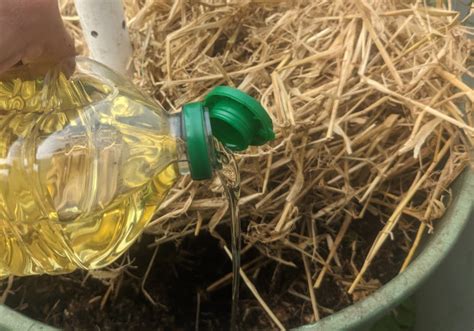
            <li>Add a tablespoon of vegetable oil to the compost pile every week to help break down the organic matter faster and improve the quality of the finished compost.</li>
            <li>Water the compost pile regularly to maintain the right level of moisture. Too much moisture can slow down the decomposition process, while too little can make it difficult for microorganisms to break down the organic matter.</li>
            <li>Turn the compost pile every few weeks with a pitchfork or shovel to aerate it and mix the materials. This will also help distribute the vegetable oil evenly throughout the pile.</li>
            <li>After a few months, your compost should be ready to use as a natural fertilizer for your plants.</li>
        </ol>
        <p>Make sure you don't add too much vegetable oil to your compost pile, as this can create an imbalance in the carbon-nitrogen ratio and attract unwanted pests.</p>
    </section>

    <section>
        <h2>How Much Vegetable Oil Can You Add To Compost?</h2>
        <h3>Recommended Amount</h3>
        <p>The recommended amount of vegetable oil you can add to your compost pile is one tablespoon per week for every cubic yard of compost. This is equivalent to 0.5% by volume.</p>
        <h3>How Much Is Too Much?</h3>
        <p>Adding too much vegetable oil to your compost pile can create an imbalance in the carbon-nitrogen ratio, which can slow down the decomposition process and attract unwanted pests such as rats, mice, and flies. It can also make the compost pile smell bad and become slimy.</p>
        <p>The maximum amount of vegetable oil you should add to your compost pile is 1% by volume. Anything more than that can do more harm than good.</p>
    </section>

    <section>
        <h2>What Are The Alternatives To Vegetable Oil In Compost?</h2>
        <h3>Other Sources Of Carbon And Moisture</h3>
        <p>If you don't want to use vegetable oil in your compost pile, there are several alternatives you can use to provide carbon and moisture, such as:</p>
        <ul>
            <li>Dried leaves</li>
            <li>Sawdust</li>
            <li>Shredded newspaper</li>
            <li>Straw</li>
            <li>Cardboard</li>
            <li>Coffee grounds</li>
            <li>Fruit and vegetable scraps</li>
            <li>Eggshells</li>
            <li>Grass clippings</li>
        </ul>
        <p>Make sure you maintain the right balance of carbon and nitrogen in your compost pile to ensure proper decomposition.</p>
    </section>

    <section>
        <h2>Can You Use Used Cooking Oil In Compost?</h2>
        <h3>Pros And Cons</h3>
        <p>You can use used cooking oil in composting, but it's not recommended. Here are some pros and cons of using used cooking oil in compost:</p>
        <h4>Pros</h4>
        <ul>
            <li>It adds moisture to the compost pile.</li>
            <li>It adds carbon to the compost pile.</li>
            <li>It helps break down organic matter faster by providing a food source for microorganisms that are responsible for decomposing the material.</li>
        </ul>
        <h4>Cons</h4>
        <ul>
            <li>It can attract unwanted pests such as rats, mice, and flies.</li>
            <li>It can make the compost pile smell bad and become slimy.</li>
            <li>It can contain toxic substances such as trans fats and acrylamide, which can harm the environment and the plants.</li>
        </ul>
        <p>If you decide to use used cooking oil in your compost pile, make sure you don't add too much and avoid oils that contain toxic substances such as trans fats and acrylamide.</p>
    </section>

    <section>
        <h2>What Are The Benefits Of Composting?</h2>
        <h3>Environmental Benefits</h3>
        <p>Composting has several environmental benefits, such as:</p>
        <ul>
            <li>It reduces waste and landfill space.</li>
            <li>It reduces greenhouse gas emissions by diverting organic waste from landfills, where it produces methane gas.</li>
            <li>It conserves water by improving soil structure and reducing runoff and erosion.</li>
            <li>It promotes biodiversity by creating habitats for microorganisms and insects.</li>
            <li>It reduces the need for synthetic fertilizers and pesticides, which can harm the environment and human health.</li>
        </ul>
        <h3>Gardening Benefits</h3>
        <p>Composting also has several gardening benefits, such as:</p>
        <ul>
            <li>It provides a natural and nutrient-rich fertilizer for your plants.</li>
            <li>It improves soil structure and water retention, which helps plants grow stronger and healthier.</li>
            <li>It suppresses plant diseases and pests by promoting healthy soil microbiology.</li>
            <li>It reduces the need for watering and weeding by improving soil quality and reducing evaporation.</li>
        </ul>
    </section>

    <section>
        <h2>How To  Composting?</h2>
        <h3>Step-By-Step Guide</h3>
        <p>If you are new to composting, here's how you can get ed:</p>
        <ol>
            <li>Choose a compost bin or pile. You can buy one from a garden center or make one yourself using recycled materials.</li>
            <li>Place your compost bin or pile in a sunny spot with good drainage.</li>
            <li>Collect your organic waste, such as fruit and vegetable scraps, yard waste, coffee grounds, and eggshells.</li>
            <li>Add a layer of brown material, such as dried leaves, sawdust, or shredded newspaper, to the bottom of your compost bin or pile.</li>
            <li>Add a layer of green material, such as grass clippings, vegetable scraps, or coffee grounds, on top of the brown material.</li>
            <li>Repeat steps 4 and 5 until you have filled your compost bin or pile.</li>
            <li>Add water to the compost pile to maintain the right level of moisture.</li>
            <li>Turn the compost pile every few weeks with a pitchfork or shovel to aerate it and mix the materials.</li>
            <li>After a few months, your compost should be ready to use as a natural fertilizer for your plants.</li>
        </ol>
        <p>Make sure you follow the guidelines for adding vegetable oil to your compost pile to avoid any problems.</p>
    </section>

    <section>
        <h2>What Are The Common Mistakes To Avoid When Composting?</h2>
        <h3>List Of Common Mistakes</h3>
        <p>Here are some common mistakes people make when composting:</p>
        <ul>
            <li>Adding too much nitrogen-rich material, such as grass clippings, which can create an imbalance in the carbon-nitrogen ratio.</li>
            <li>Adding too much brown material, such as dried leaves, which can slow down the decomposition process.</li>
            <li>Adding meat, dairy, or oily food waste, which can attract unwanted pests and create bad odors.</li>
            <li>Not turning the compost pile often enough, which can reduce oxygen levels and slow down the decomposition process.</li>
            <li>Not maintaining the right level of moisture, which can make it difficult for microorganisms to break down the organic matter.</li>
        </ul>
        <p>By avoiding these common mistakes, you can ensure that your compost pile is healthy and producing high-quality soil for your plants.</p>
    </section>

    <section>
        <h2></h2>
        <p>Composting is an excellent way of reducing waste and producing natural fertilizers for your plants. Adding vegetable oil to your compost pile can provide several benefits, such as adding moisture and carbon and speeding up the decomposition process. However, it's important to use it in moderation and follow the guidelines for adding it to your compost pile.</p>
        <p>By using vegetable oil in composting, you can contribute to a healthier environment and promote sustainable gardening practices.</p>
    </section>

    <section>
        <h2>FAQs</h2>

        <section>
            <h3>1. Can I use animal fat in compost?</h3>
            <p>No, you should avoid using animal fat in composting as it can attract unwanted pests and create bad odors. It can also contain harmful bacteria and pathogens that can harm the environment and your plants.</p>
        </section>

        <section>
            <h3>2. Are all types of vegetable oil suitable for composting?</h3>
            <p>No, not all types of vegetable oil are suitable for composting. Avoid using oils that contain toxic substances such as trans fats and acrylamide. Stick to natural and organic oils such as olive oil, sunflower oil, or soybean oil.</p>
        </section>

        <section>
            <h3>3. How long does it take for compost to be ready?</h3>
            <p>It usually takes between 2 to 6 months for compost to be ready, depending on the materials used, the size of the compost pile, and the weather conditions.</p>
        </section>

        <section>
            <h3>4. Can I use compost on my indoor plants?</h3>
            <p>Yes, you can use compost on your indoor plants, but make sure you don't overdo it. Use a small amount of compost mixed with potting soil to ensure proper drainage and avoid any problems.</p>
        </section>

        <section>
            <h3>5. Is composting expensive?</h3>
            <p>No, composting is not expensive. You can make your own compost bin or pile using recycled materials or buy one from a garden center. The materials used for composting are usually free or low-cost, such as fruit and vegetable scraps, yard waste, and coffee grounds.</p>
        </section>

    </section>

</main>
Post a Comment for "Vegetable Oil In Compost: An Ultimate Guide"