When Do You Plant Hydrangeas?
<p>Hydrangeas are beautiful flowering shrubs that add a touch of elegance and color to any garden or landscape. They are relatively easy to care for and come in a variety of colors and sizes. If you're thinking about planting hydrangeas in your yard, it's important to know when is the best time to do so. In this article, we'll discuss everything you need to know about planting hydrangeas, from choosing the right location to caring for your plants.</p>

<h2>The Best Time to Plant Hydrangeas</h2>

<p>The best time to plant hydrangeas typically depends on where you live and the climate in your area. In general, it's best to plant hydrangeas in the spring or fall when temperatures are mild and the soil is moist. This allows the plants to establish their root systems before the hot summer or cold winter weather arrives.</p>

<h3>Spring Planting</h3>

<p>If you live in a cooler climate with mild summers, spring may be the best time to plant hydrangeas. This gives the plants plenty of time to develop their roots and establish themselves before the heat of summer sets in. If you decide to plant in the spring, make sure to do so early enough so that the plants have time to acclimate before the hot weather arrives.</p>

<p>When planting in the spring, choose a spot that receives morning sun and afternoon shade. This will help prevent the plants from drying out during the hottest part of the day. Make sure to water your plants regularly and mulch around the base to help retain moisture.</p>

<h3>Fall Planting</h3>

<p>If you live in a warmer climate with hot summers, fall may be the best time to plant hydrangeas. This allows the plants to establish their root systems before the cooler winter weather arrives. When planting in the fall, make sure to do so at least six weeks before the first frost date in your area.</p>

<p>Choose a spot that receives morning sun and afternoon shade, and make sure to water your plants regularly until the ground freezes. Mulching around the base will also help protect the plants from the cold winter weather.</p>

<h2>Choosing the Right Location</h2>

<p>When planting hydrangeas, it's important to choose the right location. Hydrangeas prefer moist, well-drained soil and partial shade. They don't do well in full sun or heavy clay soils. Choose a spot that receives morning sun and afternoon shade, or dappled sunlight throughout the day.</p>

<p>If you're planting hydrangeas near a building or other structure, make sure to leave enough space for the plants to grow. Hydrangeas can reach heights of up to 8 feet tall and 6 feet wide, depending on the variety.</p>

<h3>Soil Preparation</h3>

<p>Before planting hydrangeas, it's important to prepare the soil. Hydrangeas prefer slightly acidic soil with a pH between 5.0 and 6.0. If your soil is too alkaline, you can lower the pH by adding sulfur or aluminum sulfate. If your soil is too acidic, you can raise the pH by adding lime.</p>

<p>Make sure to loosen the soil to a depth of at least 12 inches before planting. This will help the roots establish themselves more easily. Adding compost or other organic matter to the soil can also help improve drainage and provide nutrients for your plants.</p>

<h2>Planting Hydrangeas</h2>

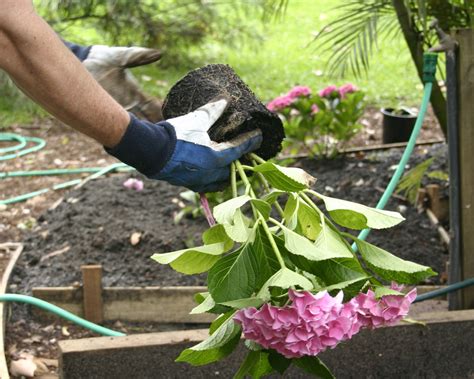
<p>When planting hydrangeas, make sure to dig a hole that is twice as wide as the root ball and just as deep. Gently remove the plant from its container and place it in the hole. Make sure the top of the root ball is level with the ground. Backfill the hole with soil, gently tamping it down around the plant. Water your new hydrangea thoroughly.</p>

<h3>Caring for Your Hydrangeas</h3>

<p>Hydrangeas are relatively low-maintenance plants, but they do require some care to thrive. Here are some tips for caring for your hydrangeas:</p>

<ul>
    <li>Water your plants regularly, especially during hot, dry weather.</li>
    <li>Mulch around the base of your plants to help retain moisture and regulate soil temperature.</li>
    <li>Fertilize your plants once a year in the spring or fall with a slow-release fertilizer.</li>
    <li>Prune your plants in the late winter or early spring to remove any dead or damaged wood.</li>
    <li>Protect your plants from strong winds and heavy snow by staking them or wrapping them in burlap.</li>
</ul>

<h2>Hydrangea Varieties</h2>

<p>Hydrangeas come in a variety of colors and sizes, from small shrubs to large trees. Here are some popular hydrangea varieties:</p>

<h3>Bigleaf Hydrangeas</h3>

<p>Bigleaf hydrangeas are one of the most popular hydrangea varieties. They are known for their large, showy blooms that come in a range of colors, from pink to blue to purple. Bigleaf hydrangeas prefer partial shade and moist, well-drained soil.</p>

<h3>Panicle Hydrangeas</h3>

<p>Panicle hydrangeas are another popular variety. They are known for their cone-shaped blooms that come in white, pink, or red. Panicle hydrangeas prefer full sun to partial shade and well-drained soil.</p>

<h3>Smooth Hydrangeas</h3>

<p>Smooth hydrangeas are native to North America and are known for their round, white blooms that turn pink as they age. Smooth hydrangeas prefer partial shade and moist, well-drained soil.</p>

<h2>Hydrangea Pests and Diseases</h2>

<p>Hydrangeas can be susceptible to pests and diseases. Here are some common problems to watch out for:</p>

<h3>Leaf Spots</h3>

<p>Leaf spots are caused by fungal infections and can cause the leaves to turn yellow or brown. To prevent leaf spots, make sure to water your plants at the base and avoid getting the leaves wet. Remove any infected leaves and dispose of them in the trash.</p>

<h3>Aphids</h3>

<p>Aphids are small, soft-bodied insects that feed on the sap of plants. They can cause leaves to curl, distort, or turn yellow. To control aphids, spray your plants with a strong stream of water or use an insecticidal soap.</p>

<h3>Japanese Beetles</h3>

<p>Japanese beetles are shiny, metallic green insects that can devastate hydrangeas. They feed on the leaves and flowers, causing them to turn brown and die. To control Japanese beetles, handpick them off your plants or use a pesticide.</p>

<h2>Hydrangea FAQs</h2>

<h3>1. How often should I water my hydrangeas?</h3>
<p>You should water your hydrangeas regularly, especially during hot, dry weather. Make sure the soil is moist but not waterlogged.</p>

<h3>2. Can I grow hydrangeas in pots?</h3>
<p>Yes, you can grow hydrangeas in pots as long as the pot is large enough for the plant to grow and the soil is well-drained. Make sure to water your plants regularly and fertilize them once a year.</p>

<h3>3. Do all hydrangeas change color?</h3>
<p>No, not all hydrangeas change color. Some varieties, like the white-flowered Annabelle hydrangea, do not change color. Others, like bigleaf hydrangeas, can change color based on the pH of the soil.</p>

<h3>4. Can I prune my hydrangeas?</h3>
<p>Yes, you can prune your hydrangeas in the late winter or early spring to remove any dead or damaged wood. You can also prune to shape your plants or control their size.</p>

<h3>5. What should I do if my hydrangeas don't bloom?</h3>
<p>If your hydrangeas aren't blooming, it could be because they are getting too much sun or not enough water. Try moving your plants to a shadier spot or watering them more frequently.</p>

<h2></h2>

<p>Planting hydrangeas can be a rewarding experience, but it's important to choose the right location and planting time. By following the tips in this article, you can ensure that your hydrangeas thrive and add beauty to your yard or landscape.</p>
Post a Comment for "When Do You Plant Hydrangeas?"